
The Importance of Heavy Equipment in Construction
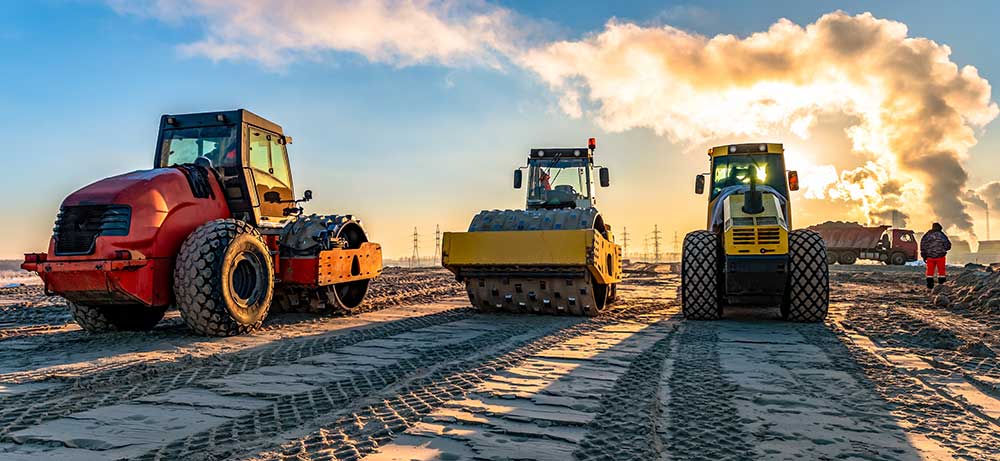
Heavy equipment stands as a silent yet powerful testament to human ingenuity. These mechanical giants, from towering cranes to robust bulldozers, have revolutionized the way we build, shaping skylines and infrastructure alike.
The primary allure of heavy machinery lies in its ability to enhance efficiency. Before the advent of these machines, construction was a labor-intensive process, often requiring large teams and extended timelines. With the introduction of equipment like excavators and backhoe loaders, tasks that once took weeks can now be completed in mere days. This not only speeds up project timelines but also reduces labor costs, making construction ventures more economically viable.
Moreover, the precision offered by these machines is unparalleled. Whether it’s the exact depth achieved by trenchers or the meticulous grading by motor graders, human error is significantly minimized. This precision ensures higher quality constructions, reducing the need for costly repairs or adjustments in the future.
From a safety perspective, heavy equipment has been a game-changer. Construction sites, inherently risky environments, have seen a decline in accidents thanks to machinery taking on more hazardous tasks. For instance, instead of workers being at risk while lifting heavy materials, cranes and loaders now bear the brunt of the weight, ensuring worker safety.
Lastly, the versatility of heavy equipment cannot be understated. Many of these machines come with various attachments, allowing them to perform multiple tasks. A skid-steer loader, for instance, can be used for digging, lifting, and even snow plowing, depending on the attachment.
The Heavyweights of Construction
In the vast world of construction, heavy equipment is the backbone, ensuring projects are completed efficiently and on time. These machines, with their sheer size and capabilities, often become the center of attention at any construction site. Let’s take a moment to understand these giants better.
Excavators
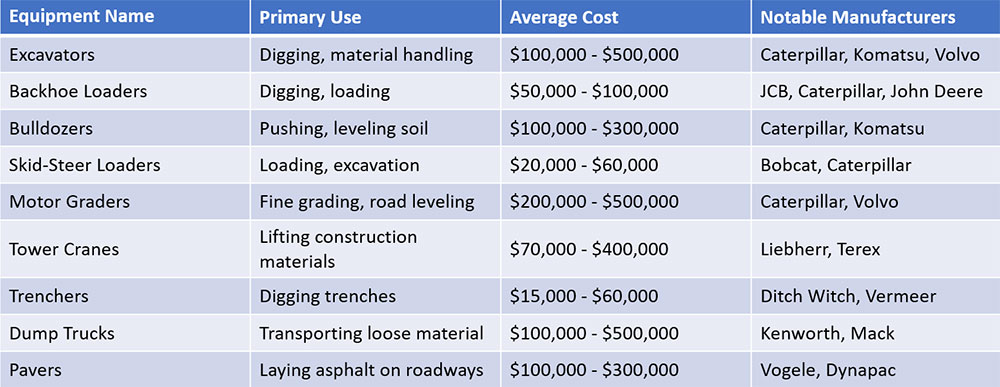
Excavators, often the giants of the construction site, have become an indispensable tool in the modern construction landscape. These powerful machines, characterized by their long arm and bucket, are primarily used for digging trenches, foundations, and holes. But their versatility doesn’t end there. They’re also employed for heavy lifting, cutting, and demolition.
There are several types of excavators, each designed for specific tasks and terrains:
- Crawler Excavators: These are track-based excavators, ideal for uneven terrains. Their tracks provide stability, making them a popular choice for mining and large-scale construction projects.
- Dragline Excavators: Larger than most other types, dragline excavators are used for civil engineering tasks like road construction and can dig deeper than standard models.
- Suction Excavators: Also known as vacuum excavators, these machines use a suction pipe to remove dirt and debris. They’re especially useful when precision is required, as they reduce the risk of damaging underground utilities.
- Long Reach Excavators: With an extended arm, these excavators are perfect for tasks that require reach rather than depth, like dredging rivers or building deep foundation piles.
To understand the sheer power of these machines, consider some key statistics. The average weight of a standard excavator can range from 3,500 to 200,000 pounds. Their digging depth can vary, but many can dig as deep as 32 feet. When it comes to operational efficiency, excavators can move large amounts of earth in a short time, making them invaluable in keeping construction projects on schedule.
Backhoe Loaders
The construction industry is no stranger to the versatility and efficiency of backhoe loaders. Often seen as the Swiss Army knife of heavy equipment, these machines are a staple on many construction sites, and for good reason.
Backhoe loaders are essentially two pieces of equipment combined into one. On one end, they feature a tractor-like unit fitted with a loader-style shovel or bucket. On the opposite end, there’s a backhoe, which is used for digging. This dual functionality makes them invaluable for various tasks, from digging trenches and laying pipes to moving dirt and loading trucks.
But what sets backhoe loaders apart from standard excavators? The primary distinction lies in their compact size and versatility. While excavators are primarily designed for digging, backhoe loaders can dig and load materials. Their smaller footprint also means they’re more maneuverable in tight spaces, making them ideal for urban construction projects or sites with limited access.
Key Insights into Backhoe Loaders
- Load Capacity: On average, a backhoe loader can handle loads between 2,500 and 4,000 pounds, depending on the model and configuration.
- Digging Depth: These machines can typically dig depths ranging from 7 to 23 feet. The exact depth depends on the size of the backhoe arm and the attachments used.
- Versatility Score: If construction equipment had a versatility rating, backhoe loaders would undoubtedly score high. Their ability to switch between tasks without needing multiple machines is a significant cost and time saver.
In recent years, advancements in hydraulic systems and computer-aided design have further enhanced the efficiency and precision of backhoe loaders. Manufacturers now offer models with advanced features like automatic ride control for smoother operation and eco modes for fuel efficiency.
Bulldozers
Bulldozers, often called “dozers,” are among the most recognizable and formidable pieces of heavy equipment on any construction site. Their primary function is to push large quantities of soil, sand, rubble, or other materials during construction works. With their robust design and massive blades, bulldozers are essential for land clearing, grading, and road building.
There are primarily two types of bulldozers – the Crawler and the Wheeled. The Crawler, as the name suggests, operates on tracks, much like a tank. This design offers superior traction and weight distribution, ideal for rough terrains and heavy-duty tasks. On the other hand, Wheeled bulldozers are more maneuverable and better suited for softer terrains and tasks that require more agility.
A key feature of bulldozers is their wide, flat blade in the front. This blade can be moved in various positions, allowing for the effective pushing of materials. Some advanced models even come with optional attachments like ripper claws, further enhancing their versatility.
To understand the sheer power of bulldozers, consider these key statistics:
- Blade Width: Ranges from 8 to 22 feet, depending on the model and purpose.
- Operational Weight: This can vary from 13 tons for smaller models to over 100 tons for the largest ones.
- Terrain Compatibility: While Crawlers dominate rough terrains, Wheeled bulldozers are often chosen for smoother surfaces.
In recent years, the construction industry has seen a trend towards eco-friendly machinery. Modern bulldozers are no exception. Many now come equipped with features that reduce emissions and are more fuel-efficient, aligning with global sustainability goals.
Skid-Steer Loaders
Skid-steer loaders, often referred to as skid loaders, are compact, versatile machines that have become indispensable in construction and landscaping projects. With their small size and unique steering mechanism, they can maneuver in tight spaces, making them a favorite for urban construction sites and indoor projects.
At the heart of a skid-steer loader’s design is its ability to skid, or slide, on its wheels to turn. This is achieved by driving the left and right wheel pairs at different speeds or opposite directions. The result? A zero-turn radius allows the machine to pivot in its footprint.
But what truly sets skid-steer loaders apart is their adaptability. With a universal mounting plate, these machines can be fitted with many attachments. From buckets and pallet forks to augers and trenchers, the range of tools that can be attached is vast. This adaptability means that with a single machine and various attachments, a construction team can perform a wide range of tasks without requiring multiple specialized machines.
Key Statistics to Know
- Load Capacity: Skid-steer loaders can typically handle loads ranging from 800 to over 2,000 pounds, depending on the model.
- Operational Weight: These machines weigh 2,500 to over 10,000 pounds, with larger models offering more power and capacity.
- Maneuverability Score: Given their compact size and unique steering, skid-steer loaders score high in maneuverability, making them ideal for congested sites.
In recent years, advancements in skid-steer loader design have focused on enhancing operator comfort and safety. Enclosed cabs with HVAC systems, improved visibility, and advanced control systems are now standard in many models. Additionally, manufacturers are increasingly focusing on sustainability, with some introducing electric skid-steer loaders that promise zero emissions and quieter operations.
Motor Graders
Motor graders, often referred to as road graders or simply graders, are essential machines in construction, especially when it comes to roadwork. These powerful machines are characterized by their long adjustable blade between the front and rear wheels. This blade is used for fine grading, spreading, and leveling construction materials to create a smooth surface.
The primary function of motor graders is to prepare the top layer of roads before applying asphalt. They play a pivotal role in ensuring that roads have the right gradient and are free from irregularities. This not only ensures the longevity of the road but also provides a safer driving experience for motorists.
There are various types of motor graders available in the market, each designed to cater to specific construction needs. For instance, some have additional ripper attachments to break up compacted surfaces, while others might have GPS systems for precision grading.
A noteworthy statistic that underscores the importance of motor graders is their operational efficiency. On average, a well-operated motor grader can prepare up to 2 kilometers of road per day, depending on the conditions and requirements of the project.
The construction industry, always keen on innovation, has seen recent advancements in motor grader technology. Modern graders are now equipped with advanced hydraulic systems for better blade control, computerized systems for accurate grading, and eco-friendly engines that reduce emissions.
Tower Cranes
Tower cranes are an essential component in constructing skyscrapers, bridges, and other large structures. Their primary role is to lift and transport heavy materials to great heights, ensuring that builders have what they need, where they need it.
There are several types of tower cranes, each designed for specific tasks and environments:
- Hammerhead Cranes: Recognizable by their horizontal jib (or working arm) and the trolley that moves along it. These are the most common type of tower crane and are often seen in the construction of tall buildings.
- Luffing Cranes: These cranes have an adjustable jib that can be raised or lowered, making them ideal for tight spaces where a fixed jib might pose challenges.
- Self-erecting Cranes: As the name suggests, these cranes can assemble themselves on-site. They’re typically used for shorter projects due to their ease of setup and dismantling.
When it comes to the numbers, tower cranes are impressive. A typical crane can reach heights of up to 265 feet, with larger ones surpassing this. Their lifting capacity is equally notable, with some cranes capable of hoisting up to 20 tons.
Safety is paramount when operating such massive machinery. Modern tower cranes have advanced safety features, including wind sensors, load moment indicators, and anti-collision systems. These features ensure that the crane operates within safe parameters, protecting the equipment and the workers on the ground.
In conclusion, tower cranes are the unsung heroes of the construction world. They play a pivotal role in shaping city skylines, making architectural marvels a reality. As technology advances, we can only expect these construction giants to become even more efficient and integral to the industry.
Trenchers
Trenchers have carved a significant niche in the construction industry, especially when laying underground utilities like water lines, gas pipes, and electrical conduits. These powerful machines are designed to dig trenches in various terrains, making them indispensable for many construction projects.
There are primarily three types of trenchers, each tailored for specific tasks and conditions:
- Chain Trenchers: Resembling a giant chainsaw, chain trenchers are ideal for cutting hard ground and rocky terrains. They use a digging chain or belt to cut the ground and are commonly used for deeper trenches.
- Wheel Trenchers: Equipped with a toothed metal wheel, wheel trenchers are perfect for softer grounds. They can cut wider trenches and are often preferred for road construction and agricultural tasks.
- Micro Trenchers: As the name suggests, these are smaller and are used for tasks that don’t require deep trenches, such as installing fiber optic cables. Their compact size allows them to operate in tight spaces, making them a favorite for urban projects.
When considering the operational efficiency of trenchers, several factors come into play. The depth and width of the trench, the type of soil, and the trencher’s speed all contribute to its performance. On average, a trencher can dig anywhere from 1 to 8 feet deep, with widths ranging from 4 to 12 inches. However, these numbers can vary based on the machine’s specifications and the project’s requirements.
Dump Trucks
Dump trucks have long been the backbone of construction sites, pivotal in transporting materials. These heavy-duty vehicles are designed to carry large amounts of loose material, such as sand, gravel, or demolition waste, from one location to another. Their unique design, featuring an open-box bed hinged at the rear, allows the bed to be lifted, tipping out the cargo.
There are different types of dump trucks, each tailored to specific needs and terrains:
- Standard Dump Trucks: The most common type, these trucks have a full truck chassis with the dump body mounted onto the frame. They’re best suited for transporting loose material on well-maintained roads.
- Articulated Dump Trucks (ADTs): These are off-road dump trucks ideal for rugged terrains and large construction projects. With a two-piece design, the cab and the dump body are separate, allowing more movement and flexibility.
- Transfer Dump Trucks: A unique design where one truck pulls two or more trailers. These trucks are beneficial for transporting large quantities of material, but they’re limited to well-paved roads due to their length.
Regarding performance metrics, dump trucks are evaluated based on their load capacity, terrain compatibility, and fuel efficiency. For instance, while a standard dump truck can carry an average of 12-14 tons, larger models, like the Super Dump Truck, can transport up to 26 tons of material. Fuel efficiency, however, varies based on the truck’s size, load, and terrain. On average, a large dump truck can consume between 6.2 to 7.4 miles per gallon.
Pavers
These machines are essential for laying out smooth and even surfaces, be it roads, sidewalks, or airport runways. Their primary function is to spread and compact the asphalt or concrete mixture, ensuring a uniform finish that stands the test of time.
Pavers come in various sizes and configurations, tailored to the specific needs of a project. The most common type is the tracked paver, designed for larger projects like highways and main roads. Its counterpart, the wheeled paver, offers more maneuverability and is often chosen for smaller tasks like parking lots or residential streets.
One of the remarkable features of modern pavers is their adaptability. With adjustable screeds, operators can set the width of the paved area, allowing for flexibility in construction. This feature is particularly beneficial when working on roads with varying widths or creating pedestrian pathways alongside main roads.
But it’s not just about laying the material; it’s about doing it right. Advanced sensor technology in contemporary pavers ensures that the depth and compaction of the material are consistent throughout. This uniformity is crucial for the longevity of the paved surface, reducing the need for frequent maintenance and repairs.
In terms of statistics, the average paver can lay between 300 to 500 tons of asphalt per day, depending on the model and conditions. Their operational speed typically ranges from 3 to 5 km/h, ensuring precision while maintaining efficiency.
As urbanization grows, the demand for well-paved roads and pathways will only increase. Pavers, with their advanced features and adaptability, are set to meet this challenge head-on, ensuring our cities and towns remain accessible and well-connected.
Pile Boring Machines
Pile boring machines, often simply referred to as boring machines, play a pivotal role in the construction industry. These machines are designed to drill deep into the earth, creating holes or bores for placing foundation piles. The strength and stability of many towering structures, from skyscrapers to bridges, owe their existence to the precision and efficiency of these machines.
There are various pile boring machines, each tailored for specific ground conditions and project requirements. The most common types include:
- Mechanical Boring Machines: These are traditional machines that rely on mechanical means to drill into the ground. They are often used for medium-depth bores and are known for their reliability.
- Hydraulic Boring Machines: With the power of hydraulics, these machines can achieve greater depths and are suitable for projects that require deep foundations, such as high-rise buildings or bridges spanning large bodies of water.
- Rotary Boring Machines: These machines use a rotating drilling tool, making them highly efficient for boring in challenging ground conditions, including rocky terrains.
Key statistics that define the capability of a pile boring machine include bore depth, diameter, and operational efficiency. For instance, while some machines are designed to achieve depths of up to 60 meters, others might be tailored for narrower bores with diameters as small as 0.5 meters. Operational efficiency, on the other hand, refers to the speed and precision with which these machines can complete their tasks.
Navigating the Heavy Equipment Landscape
The construction industry, with its vast array of projects, relies heavily on a diverse range of machinery. Each piece of equipment has its unique role, and its market shares reflect the demand and utility in various construction scenarios.
In recent years, the heavy equipment market has seen a shift in demand. Excavators, known for their versatility, have dominated the market due to their extensive use in small-scale and mega-construction projects. Following closely are backhoe loaders and bulldozers, the workhorses of the industry, often seen in almost every construction site.
Dump trucks, with their indispensable role in transporting materials, have also carved a significant market share. On the other hand, specialized equipment like pavers and pile boring machines, though essential, have a niche market, reflecting their specific use cases.
However, it’s not just about the numbers. The market share dynamics also tell a story of evolving construction methodologies, urbanization trends, and infrastructural developments. For instance, the rise in skyscrapers and high-rise buildings in urban areas has increased the demand for tower cranes.
To provide a clearer picture, here’s a breakdown of the heavy equipment market share:
- Excavators: 28%
- Backhoe Loaders: 22%
- Bulldozers: 18%
- Dump Trucks: 15%
- Skid-Steer Loaders: 7%
- Motor Graders: 4%
- Tower Cranes: 3%
- Trenchers: 2%
- Pavers: 0.8%
- Pile Boring Machines: 0.2%
These percentages offer a snapshot of the current industry preferences. However, as construction methodologies evolve and new technologies emerge, these numbers will shift, painting a new picture of the industry’s machinery landscape.